
People looking to build a new home or ADU may be confused by terms being thrown around in articles and on websites. What are the differences among pre-fab, stick-built, panelized, and modular construction?
To understand the differences between panelized, modular and traditional construction, it’s easiest to think about it in terms of where and how your home is built. While traditional construction occurs entirely on-site, modular and panelized methods, which are both forms of prefabrication (prefab), move much of the work to a factory environment to increase speed and efficiency, with only final assembly happening at the eventual homesite.
Here’s a quick checklist to help outline the differences between the various construction methods.
Pre-Fab (Prefabricated)
“Pre-fab” is just a term for anything built partially or completely off-site. This includes modular homes, panelized homes, “kit homes” or even manufactured (i.e. mobile) homes. Note that almost no house (except possibly a mobile home) is entirely pre-fab. Almost every pre-fab house is a hybrid of construction types due to site conditions, an unusual design or add-ons such as porches and steps. Foundations, for example, are not pre-fabricated. And, pre-fabrication is almost as old as wood framing. Sears Roebuck started selling kit homes in 1908. The first recorded panel homes were shipped from England to Massachusetts in 1624.

Image: Panelized ADU by Wellmade
Traditional (“Stick-Built”) Construction
Traditional, or stick-built, construction is what we’re used to seeing every day, and likely how your own house was built. It uses building materials delivered to the job site, cut and constructed piece by piece from the ground up. Foundations are poured, then framing, roofing, and finishes are completed sequentially on-site. Although we call this “stick” built, this method employs the ultimate pre-fab module: a 2X(4 6, 8, 10, 12) timber stud or joist.
- Pros: Maximum design flexibility and customization; easily adaptable to challenging lot conditions; widely understood by all local contractors and subcontractors.
- Cons: Longest build timeline; highly susceptible to weather delays and material waste; requires much more on-site labor. Generally more expensive than pre-fab options, although this difference can vary widely.
Traditional Construction
Modular Construction
Modular construction refers to building entire houses or “modules” of houses in a factory, trucking them to the site, and assembling using a large crane on its locally built foundation. Modular homes usually include interior finishes like flooring, paint, lights, plumbing fixtures and cabinets — in a factory, trucking the modules to the site, and assembling the final structure on the foundation.
- Pros: Fastest overall completion time; may significantly reduce on-site disruption. Modular homes are often “pre-certified” by the state housing authority, which saves time in permitting
- Cons: Very limited design flexibility due to the manufacturing process, inflexibility of the state certification, and physical limitations of fitting on trailers and passing under bridges; high transportation and crane costs; requires easy site access for large delivery trucks and cranes (steep or narrow streets and power lines will eliminate many sites).

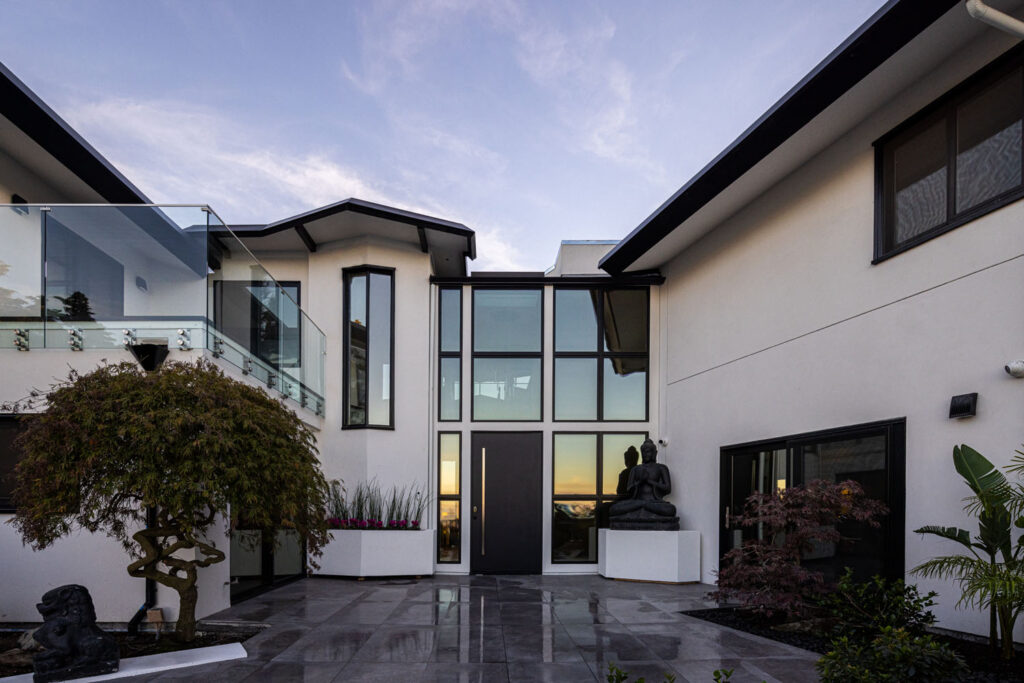
Panelized Green House, DNM Architecture. Image:
Panelized Construction
If modular homes are like Jenga (or Duplos for those with young children), then panelized homes are Legos. Walls and roofs (sometimes floors) are segmented into panels that are produced in a factory and shipped to the site where they are quickly assembled to create a weather-tight shell (often in just a few days), reducing site labor and minimizing delays. The panels may include some electrical and plumbing infrastructure, but these are usually installed on site, along with insulation and drywall.
- Pros: Customization and design freedom is comparable to traditional construction although needs to be timed before fabrication begins; has many of the benefits of modular construction without the access restrictions; easier and cheaper to ship than full modular homes; No large cranes required, and sometimes no crane at all; Completely custom homes can be panelized before construction; significant waste reduction, saving both money and landfills.
- Cons: Still requires more on-site labor and assembly time than modular; savings vs. traditional construction may be limited if pre-established floorplans and factory finishes are customized; Permitting follows the same traditional permit process as stick-built.
DNM Architecture is experienced with numerous types of panelized homes as well as traditional stick-built construction. Now, with the recent merger between DNM Architecture and Wellmade, panelized construction is a core strategy in the DNM Architecture design process, delivering time and cost savings to our clients without sacrificing design or construction quality.