
Adding an elevator to a house improves accessibility, comfort, and property value. As people stay in their homes longer either by choice or due to the realities of the housing market, they often seek ways to make daily life easier and safer, especially on multiple floors. A residential elevator can meet these needs while also offering a sense of luxury and convenience.
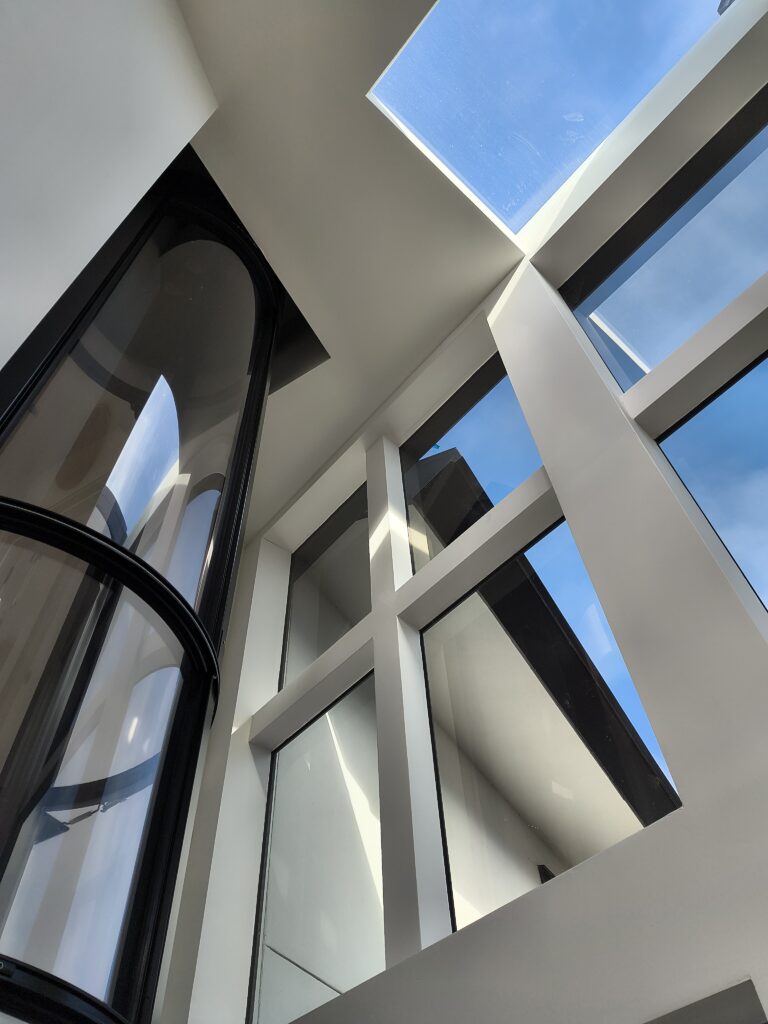
Our recently completed Sugarloaf renovation, we addressed a request that’s often seen as a luxury but is becoming increasingly popular in new builds as well as renovations – an elevator.
David Marlatt
Adding an elevators to a home makes life easier.
One of the main reasons homeowners consider installing an elevator is accessibility in conjunction with aging. For older adults, people with disabilities, or anyone recovering from an injury, stairs can be difficult and dangerous. An elevator reduces the risk of falls and allows residents to move between floors with less effort and pain. This can help people remain in their homes longer instead of moving to a one-story house or an assisted living facility.
In addition, an elevator makes it easier to carry heavy items, such as groceries, laundry, or luggage, which benefits everyone in the household, not just those with mobility challenges. For families with young children, an elevator can simplify everyday tasks like moving strollers or boxes between floors. Over time, this convenience can change how people use their homes, making upper floors feel more accessible and practical.
How easy is it to add an elevator to an existing home?
An elevator is not particularly difficult to plan into a home still in in the design phase – that’s just one of the multiple things an architect can do for you, but retrofitting an elevator in an existing structure is tough. It depends heavily on the current configuration of the home, and whether there is a large enough space that aligns on all floors. Floor openings need to be cut and reframed. Often walls must be moved and electrical wiring changed, and if the walls are structural, things get even more complicated very quickly. Regular hydraulic or traction elevators (the kind you’re used to seeing in most buildings) require a small pit, although Pneumatic Vacuum Elevators (PVE) like the one we recently added in our Sugarloaf project do not. Finally, the motor must be located nearby in an accessible location, and this is sometimes an additional challenge.

David Marlatt
How much does a home elevator cost?
The cost of the elevator itself is always about the same. A PVE elevator installed is about $65K for 2 stops and $85K for 3 stops. Traditional hydraulic elevators are more, offer more options, and the price can vary greatly depending on the factors mentioned above. The biggest cost variable in a retrofit is the construction that may be required to accommodate the elevator, whether that is just an opening in the floor or an enclosed shaft. Despite appearances, elevators are not especially heavy but still may require a small foundation or thickened slab. At DNM architecture, we really like PVE elevators for their compact footprint, ease of installation and attractiveness in a modern home. The fact that no shaft is required also means a significantly lower cost and faster installation.
Regardless of the technology and application, many people are looking for “aging-in-place” features that will serve them as they grow older. An elevator signals that the house is prepared for long-term living and can accommodate a wider range of needs. In competitive real estate markets, this can distinguish a property from similar homes that lack such accessibility features, meaning more return for your housing investment if or when a client decides to sell.
At DNM, we are always exploring ways that a house can transform the way people live. Elevators enhance accessibility, support aging in place, increase comfort, and may improve resale value. At the same time, like any significant renovation, they require thoughtful planning, investment, and a commitment to safety and maintenance.
For many homeowners, the benefits of convenience, independence, and peace of mind make a residential elevator a worthwhile addition, and architects have many ways to make it a reality.